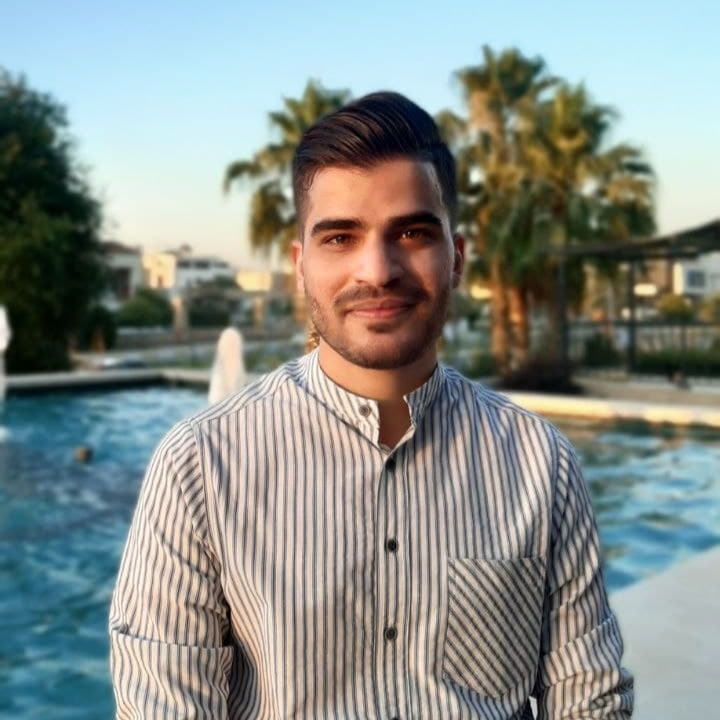
From crisis-response data in Iraq and Ukraine to real-time plant intelligence in greenhouse farming, this month’s spotlight features Sulaiman Ahmed, a technologist whose career bridges humanitarian impact and cutting-edge data science.
Now part of the data science team at Gardin, Sulaiman is helping tackle yield loss and resource waste by giving growers plant-level insights to make smarter decisions. Raised around circuit boards in a small electronics repair shop, trained in Electronics Engineering, shaped by a life-changing bootcamp with Re:Coded, and forged in high-pressure humanitarian roles with the International Organization for Migration, Sulaiman’s journey is one of curiosity, intensity, and relentless growth.
In this conversation, we explore the evolving role of AI in our work, the mentors who make all the difference, and how community can open doors, build confidence, and change lives.
Can you share a bit about your background?
I’m currently working under the data science team at Gardin, a VC-backed startup that solves yield loss and resource waste in greenhouse farming by giving growers real-time, plant-level data to make smarter growing decisions. I worked in the humanitarian sector for 6 and a half years in both capacity building and information management roles. I worked with the UN-Migration agency, International Organization for Migration for almost 5 years mainly across Iraq and Ukraine missions, developing databases, data stories, and dashboards to enable UN agencies and NGO partners track and monitor population displacement and mobility during crises, and have a clearer picture of where people were moving, why, and what they needed. Humanitarian sector shaped me in many forms, it introduced me to brilliant people, pushed me to work lean under pressure, and most importantly it equipped me with the technical skills necessary to move forward in my career.
Did you come up through a “traditional” techie route or has your career taken twists and turns along the way?
Growing up, my dad owned a small electronics repair workshop. I played with broken PCB boards, transistors, headphones, speakers, and read transistor catalogues in my spare time. Years later, when I finished my GCSE, I was defaulted to Engineering, so I studied Electronics Engineering in my bachelors. It was hardware and systems intensive degree, but early on I realised software was where I wanted to go, so I started teaching myself software development on the side, then I got a fully-funded opportunity to enrol in a bootcamp by Re:Coded (non-profit tech education organisation) to learn mobile applications development. It was a turning point. I learned to work lean, to ask the right questions, and invest in my soft skills. The bootcamp prepared me for success. Every class, every project, every interaction with my peers and mentors felt like it was pulling me in the right direction.
Reflecting on your career, is there a specific moment that stands out as pivotal or defining?
I worked every waking hour in my twenties. I loved the work I did in the humanitarian world, it gave me purpose. You could feel the impact over time in a way that’s hard to replicate. Together with the team we built amazing internal and public products that I am proud of. I think that experience pushed me out of my comfort zone on too many occasions. I don’t think I will be here without that role. It truly changed me.
What piece of advice would you give your younger self as you embarked on your professional journey?
Slow down! I spent a lot of time thinking about my career and designing/building it brick by brick. I remember I never had a “free day”. It’s either work, or side-projects. Every hour of my workday and weekends were filled with meet-ups, freelance projects, co-working with friends, or learning a new skill.
Looking ahead, what’s your big prediction for the tech landscape in 2025?
We keep seeing agents getting better. Coding is already shifting. The role of a programmer has changed during the past two years. I think we will see this kind of shift across all industries. I also believe every techie person will have a local AI assistant customised to their needs. This is already happening with OpenClaw!
Considering your involvement in Silicon Brighton and community-building, what does the concept of ‘community’ mean to you personally? How important is it in the tech industry?
There’s something about being around people who are genuinely excited about the same things I care about. Silicon Brighton and Brighton Data Forum gave me access to amazing talks and events, and the opportunity to connect with people I would have never meet elsewhere. Silicon Brighton helped me find my first employer in the UK! When I moved to Brighton almost 2 years ago, I got a part-time web development job through a SB member. Beyond that, it gave me something harder to quantify: confidence. The confidence that comes from realising you belong in a room, and that people value what you bring to it.
How do you balance staying updated with the latest industry trends while ensuring continuous personal and professional growth? Any specific resources or practices you find particularly valuable?
It’s really difficult to stay up-to-date these days, every other day and week there is something major happening in the tech world. It’s both exciting and tiring at the same time. Usually I spend my Saturdays at the public library to go through all the online resources I have saved during the week. I go through them one by one for 9-5. These online resources vary in size and shape. They could be technical and I sometimes switch to my developer mode mentality and start coding, or it could be an article about storytelling or an essay about art. I also take the book I have been reading throughout the week and process all the notes I have taken. For staying informed day-to-day, I’ve settled on Substack and Medium. They’re clean, relatively noise-free, and let me follow my interests across tech, culture, and everything in between without the chaos of a social media feed.
As someone who has contributed significantly to the community, how do you see mentorship playing a role in the development of the next generation of tech professionals?
Mentors played an important role in my life. I’ve been fortunate to have people in my life who were genuinely invested in my growth. Mentors who pushed me when I was comfortable, opened doors I didn’t even know existed, and showed up with the kind of support you can’t really put a job title to. For the next generation professionals, especially coming from non-traditional backgrounds, mentorship can be the answer to all the questions they have, unlocking access to knowledge and experience which are necessary to navigate both jobs and life of the future.
Is there any additional wisdom, experience, or anecdotes you’d like to share with our audience?
I’ll leave you with something a friend once told me that has stuck with me ever since: the world is your oyster. Keep working and obsess over the things you love, the absence of immediate return isn’t a sign that it isn’t working, it’s just part of who you are becoming.. and who you’re becoming will be unrecognisable by the present you.
Anything else you would like to promote to our community?
Feel free to check my website: (https://suliahmed.com)